Why Law Firms Should Stop Using WordPress in 2026
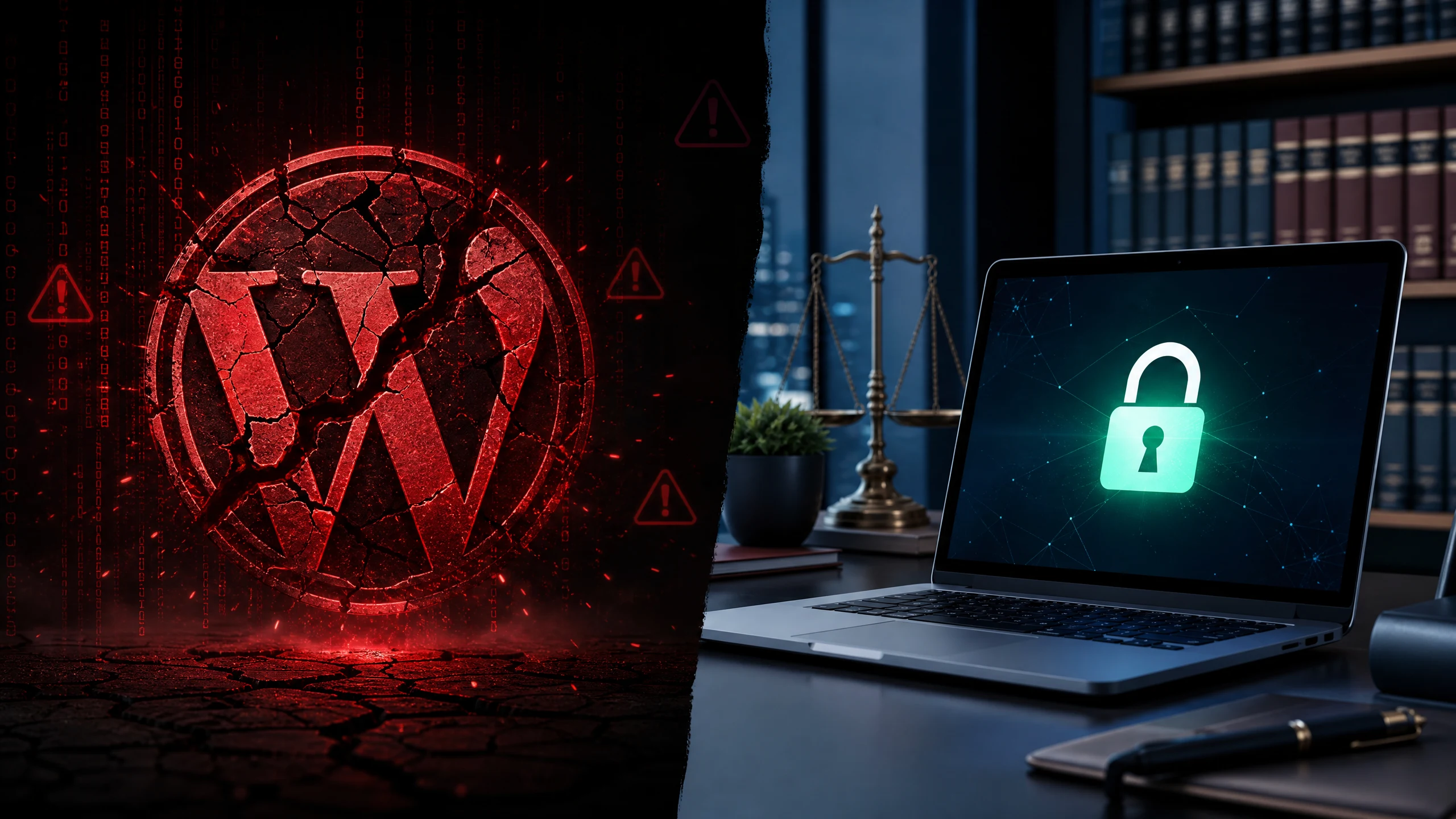
WordPress vulnerabilities rose 42 percent in 2025, reaching 11,334 total flaws. For Ohio law firms, a compromised website is not just an IT problem. It is a potential ethics violation under ABA Rules 1.1 and 1.6. Here is why the legal industry is moving away from WordPress.
In this article
If your law firm website runs on WordPress, you are currently operating in the most hostile security environment the platform has ever seen.
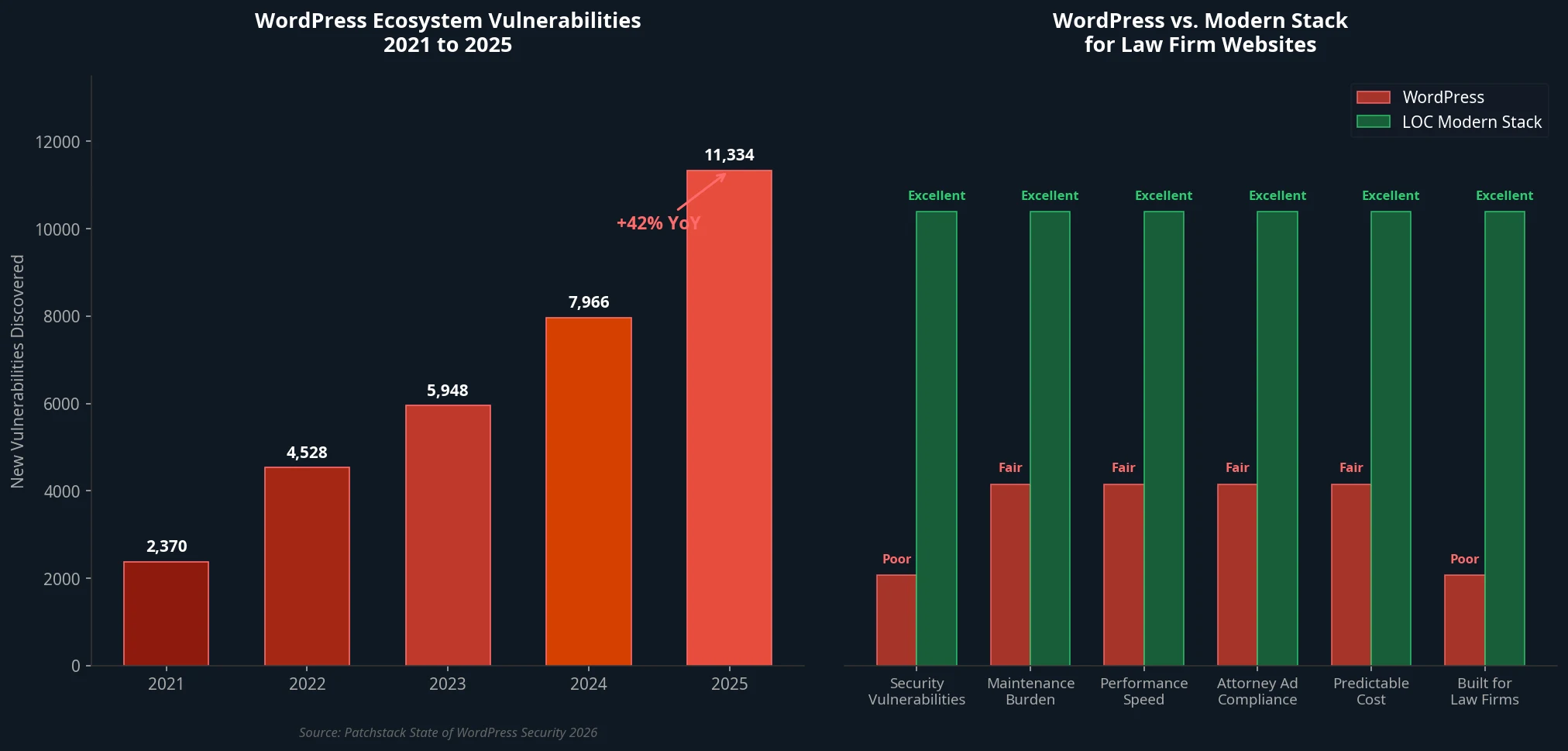
According to the latest industry data, 11,334 new vulnerabilities were discovered in the WordPress ecosystem in 2025. That is a 42% increase from the previous year. Even more alarming, 46% of those vulnerabilities had no patch available at the time of public disclosure, and the median time from disclosure to mass exploitation is now just five hours [1] [2].
For an e-commerce store or a lifestyle blog, a hacked website is a frustrating inconvenience. For an Ohio law firm, a compromised website is a potential ethics violation, a threat to client confidentiality, and a direct risk to your Ohio Rules of Professional Conduct compliance.
Here is why WordPress has become structurally risky for law firms, and why Law Offices of Cleveland builds on the modern stack instead.
The Ethics of Law Firm Cybersecurity
When an attorney's website is compromised, the fallout extends far beyond IT. The American Bar Association and the Supreme Court of Ohio have made it clear that cybersecurity is an ethical obligation.
Under ABA Model Rule 1.1 (Competence), Comment 8 requires attorneys to understand "the benefits and risks associated with relevant technology." Furthermore, ABA Model Rule 1.6(c) requires attorneys to "make reasonable efforts to prevent the inadvertent or unauthorized disclosure of, or unauthorized access to, information relating to the representation of a client" [3].
If a hacker exploits a WordPress vulnerability to access your site's backend, they may gain access to contact form submissions, confidential client inquiries, and uploaded documents. In Ohio, failing to secure this data can lead to bar discipline, malpractice claims, and mandatory breach notification requirements.
The wp2shell Exploit: On July 17, 2026, WordPress shipped an emergency core update to patch a critical remote code execution flaw known as wp2shell. This vulnerability allowed anonymous attackers to run code on a fully default installation with no plugins at all. While WordPress core issues are rare, they expose the fundamental risk of relying on a 20-year-old architecture [4].
The Plugin Dependency Problem
WordPress core is generally stable, but almost no law firm runs a "core only" site. To get the functionality you need, you have to install plugins.
This is where the architecture breaks down. In 2025, 91% of all new WordPress vulnerabilities were found in plugins [1]. The average law firm website runs 20 or more plugins for SEO, contact forms, caching, security, and design. Each one of those plugins is third-party code with deep access to your site.
When 43% of new vulnerabilities require zero authentication to exploit, your site can be compromised by automated bots scanning the internet for outdated plugin versions [2]. You do not have to be specifically targeted to be hacked.
Come see the floor.
Twenty minutes. We'll show you the available offices and help you work out which membership actually fits.
Schedule a tourBeyond Security: The Hidden Costs of WordPress
Even if you manage to avoid a security breach, WordPress creates structural pain points that drain time and money from your practice.
The Maintenance Burden A WordPress site requires constant babysitting. Plugins must be updated weekly. Sometimes an update breaks the theme, requiring a developer to fix it. This creates an unpredictable "maintenance tax" that you either pay in your own unbillable hours or by keeping a web agency on retainer.
Performance and SEO Penalties Google prioritizes fast, mobile-optimized websites. WordPress, weighed down by a heavy database and dozens of plugins, is notoriously slow out of the box. Attorneys often spend thousands of dollars trying to optimize a WordPress site just to pass Google's Core Web Vitals assessment.
Advertising Compliance Risks Ohio RPC Rule 7.2 requires all attorney advertising to include a professional office address. If a plugin update breaks your site layout or a hacker injects spam links into your footer, your site is no longer an accurate representation of your practice.
The Modern Stack Alternative
Law firms do not need complex database-driven content management systems. You need a fast, secure, professional presence that generates leads and requires zero maintenance.
This is why Law Offices of Cleveland builds attorney websites on the modern web stack.
Instead of relying on a vulnerable database and fragile plugins, we build statically generated, serverless websites. This means:
- Zero Database Vulnerabilities: There is no traditional database to hack and no plugins to exploit.
- Lightning Fast: Pages load instantly because they are pre-built, giving you an immediate SEO advantage.
- Zero Maintenance: You never have to click "update plugin" or worry that a theme update will break your site.
- Built by a Lawyer: We understand Ohio RPC advertising rules and what prospective clients are actually looking for.
Predictable Pricing, No Long-Term Contracts
Most legal marketing agencies lock you into 12-month contracts and charge thousands of dollars for a slow WordPress template.
We offer a clean, predictable model: a one-time setup fee and a simple month-to-month rate that covers hosting, security, backups, and content edits. You stay because the site works, not because you are locked in.
If you are a private office member at Law Offices of Cleveland, your setup fee is discounted by 50%.
Your practice deserves a website that is an asset, not a liability. Stop worrying about plugin updates and security patches, and start focusing on your clients.
References
[1] Patchstack, "State of WordPress Security in 2026" (February 2026). [2] HideMyWP, "WordPress Security Statistics 2025-2026" (April 2026). [3] American Bar Association, "Model Rules of Professional Conduct: Rule 1.6 Confidentiality of Information." [4] TechCrunch, "Hackers are exploiting recently patched WordPress bugs" (July 20, 2026).
Frequently asked questions
Is WordPress safe for law firm websites?
WordPress requires constant maintenance and security patching to remain safe. With over 11,000 new vulnerabilities discovered in 2025 (mostly in plugins), it represents a significant security burden for solo attorneys who do not have dedicated IT staff.
What happens if my law firm website is hacked?
Beyond downtime and lost leads, a hacked law firm website can expose confidential client inquiry data submitted through contact forms. This can trigger breach notification laws and potential ethics violations under ABA Model Rule 1.6.
What is the alternative to WordPress for attorneys?
Modern stack (serverless or statically generated) websites offer a secure alternative. Because they do not rely on a traditional database or third-party plugins for core functionality, they eliminate the primary attack vectors used by hackers.
Does Law Offices of Cleveland build websites?
Yes. LOC designs, builds, and hosts modern stack websites specifically for solo attorneys and small firms. The service is month-to-month with no long-term contracts, and LOC office members receive 50% off the initial setup fee.
Come see the floor.
Twenty minutes. We'll show you the available offices and help you work out which membership actually fits.
Schedule a tourThis article is for general information only and is not legal advice. Law Offices of Cleveland is an office-sharing provider, not a law firm, and does not provide legal services. Reading this does not create an attorney-client relationship with anyone. Written and edited with AI assistance; reviewed by LOC.


